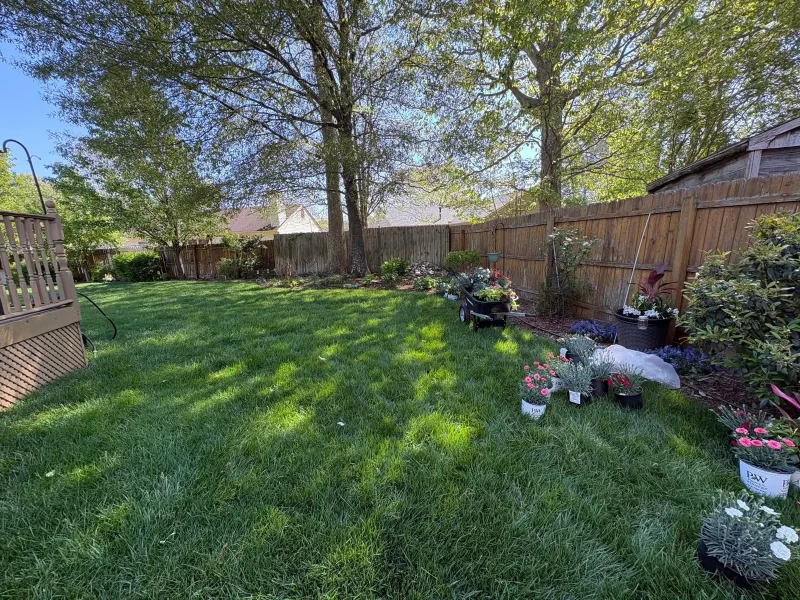
Bare patches in a Newport News lawn are one of the most frustrating things a homeowner can deal with — partly because they’re so visible, and partly because throwing seed at them doesn’t always work. The reason those patches keep coming back, season after season, usually isn’t the seed. It’s that the underlying cause was never addressed in the first place.
Here’s how to actually diagnose what’s happening in your yard and fix it in a way that holds.
The Key Thing to Understand About Tall Fescue
Before getting into causes, there’s one characteristic of tall fescue — the most common lawn grass in Newport News and across the Hampton Roads area — that shapes everything about how bare patches behave here.
Tall fescue is a bunch-type grass. It grows in clumps and does not spread via stolons or rhizomes the way Bermuda or Zoysia does. That single characteristic shapes everything about how you manage it. Bare spots don’t fill in naturally — thinning doesn’t self-correct. Dreamlawns
That’s the critical difference between a fescue lawn and a warm-season lawn. Bare spots in a fescue lawn stay bare unless you reseed or sod them. No amount of waiting and hoping will close a bare patch in a tall fescue yard. It has to be repaired actively — and repaired correctly. Triturfsod
What’s Actually Causing the Bare Patches
Identifying the cause before you repair is the step most homeowners skip — and it’s exactly why the same patch comes back the following season. The most common culprits in Newport News yards fall into a few clear categories.
Fungal Disease
Hampton Roads summers create near-perfect conditions for brown patch and dollar spot — warm temperatures, high humidity, and frequent rain. Lawn diseases like dollar spot and brown patch kill grass in circular or irregular patches, leaving bare soil behind. If the dead area has a somewhat circular shape or was preceded by a discolored ring, disease is likely the cause. Reseeding without addressing the fungal pressure just means the new grass faces the same conditions that killed the last batch. Harbor Soils
Soil Compaction
Soil compaction is one of the most overlooked causes of bare patches, especially in yards with heavy clay soil. Much of the Newport News Peninsula sits on dense clay that compacts easily under foot traffic, mowing equipment, or even heavy rainfall over time. Compacted soil blocks water, oxygen, and nutrients from reaching roots — grass thins, weakens, and eventually dies in those spots. The bare area may not have an obvious cause unless you test the soil with a screwdriver: if it won’t push in easily, compaction is likely a factor. Unlimitedlawncare
Shade Stress
Most lawn grasses need four to six hours of direct sun. Under trees or against north-facing walls, grass struggles and eventually dies. Newport News neighborhoods with mature tree canopy — common throughout the city’s established areas — often have patches of lawn that thin out progressively under dense shade. This is a site condition, not a disease or pest problem, and reseeding with a standard sun mix won’t hold in a heavily shaded area. Harbor Soils
Grub and Pest Damage
Grubs — the larvae of Japanese beetles and other beetles — feed on grass roots just below the soil surface. The first sign is usually patches of turf that feel spongy underfoot or can be peeled back like a loose carpet. Lawn grubs and sod webworms chew through grass roots and kill turf quickly. If the bare area pulls up easily with no roots attached, grubs are worth investigating before any repair work begins. Electrawn LLC
Pet Urine
High nitrogen levels in dog urine burn grass blades and create dead brown patches. These spots tend to be small, roughly circular, and sometimes surrounded by a ring of greener grass — where the diluted nitrogen at the edges acts like a light fertilizer. They’re among the most persistent bare patches because the same spot gets hit repeatedly. Electrawn LLC
Heavy Foot Traffic
Repeated walking over the same spot compacts soil and kills grass through stress and poor drainage. Common paths between a gate and a back door, or along a fence line, are typical locations. Reseeding a high-traffic path without any change to how the area is used will produce the same result within a season. Harbor Soils
How to Actually Fix Them
Once you’ve identified the cause, the repair process for Newport News tall fescue lawns follows a consistent sequence.
Step one: address the underlying cause first. Aerate compacted areas before seeding. Treat active fungal disease before introducing new seed into the same conditions. Adjust irrigation patterns if evening watering is contributing to disease pressure. Skipping this step is the most reliable way to end up with the same bare patch next year.
Step two: prepare the soil. Loosen the top two to three inches of soil in the bare area, remove any dead thatch or debris, and add a thin layer of quality topsoil or compost if the soil is particularly poor or compacted. Seed-to-soil contact is what determines whether germination actually happens — loose, receptive soil matters more than the seed itself.
Step three: seed with the right material. Match the seed to what’s already in the lawn. Choosing a seed variety that matches your existing turf is essential because grass types differ in growth habits, color, blade texture, and seasonal performance — mixing incompatible species results in a lawn that looks patchy and uneven, with different sections growing at different rates or standing out in color. For tall fescue lawns in Newport News, use a quality turf-type tall fescue blend. Lawn Synergy
Step four: time it right. Spring and fall are the best times to fix bare patches in Virginia. Tall fescue seed germinates in ten to fourteen days and performs best when soil temperatures sit in the fifties and sixties. Fall is generally the preferred window — cooler temperatures reduce stress on new seedlings, and the grass has time to establish before the following summer’s heat and humidity arrive. Newimagelawn
Step five: keep foot traffic off the repair area. Foot traffic crushes young grass seedlings before they anchor into the soil — stay completely off the repaired area until the new grass reaches three inches tall. Electrawn LLC
When Patching Isn’t Enough
If bare and thinning areas cover a significant portion of the lawn, spot repairs may not be the most practical solution. University extension programs at Virginia Tech and others converge on the same guideline: if more than 50% of your lawn is damaged, dead, or overtaken by weeds, full replacement is more practical than patching. When you’re spot-repairing half the lawn, you spend nearly as much as replacing the whole thing — but end up with a patchwork of new and old turf with different textures, colors, and maturity levels. Triturfsod
A full overseeding in fall, combined with aeration, gives a struggling Newport News lawn a reset that spot repairs simply can’t match.
Let B. Meister Take a Look
Diagnosing bare patches correctly before spending time and money on seed is exactly the kind of thing that separates a lawn that actually recovers from one that gets patched and goes bare again. B. Meister Landscaping provides professional yard maintenance throughout Newport News and the surrounding Hampton Roads area — including assessments that identify what’s actually behind a patchy lawn before any repair work begins.
📞 Contact us today for a free yard consultation and let’s get your lawn back to a shape you’re proud of.