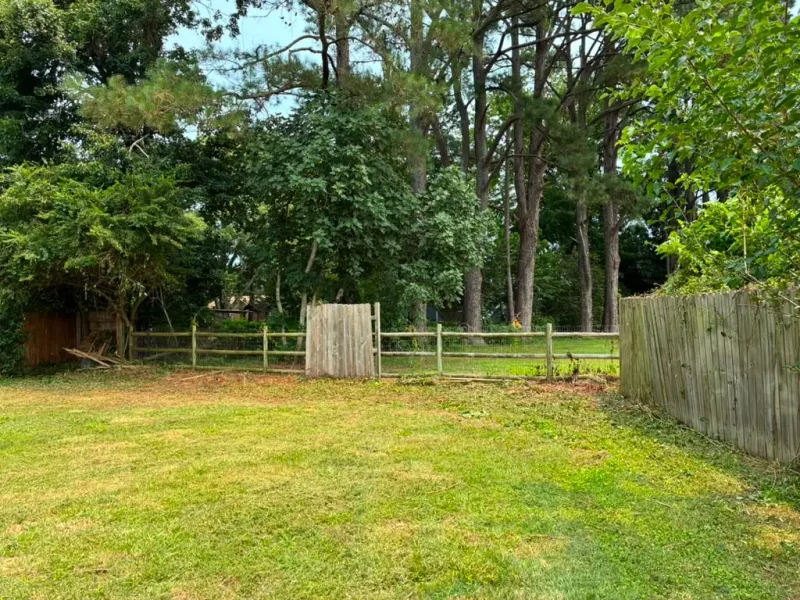
Vines growing on a wood fence have an appealing look at first glance — lush, green, and natural. What most Newport News homeowners don’t realize until it’s too late is that the same growth making the fence look lived-in is quietly working against it from the inside. By the time the damage is visible from the outside, it’s usually already gone well past the surface.
Why Wood Fences and Vines Are a Bad Combination
The primary damage caused by vines on any wood structure comes down to one thing: moisture. Vines trap moisture against the fence boards and hold it there, keeping the wood perpetually damp in ways it was never designed to handle. In Hampton Roads, where humidity already runs high through spring, summer, and fall, a vine-covered fence faces compounded moisture pressure — the ambient humidity that’s always present, plus the additional trapped moisture layer the vines create against the wood surface.
That sustained moisture contact sets off a chain of problems:
- Rot and decay. Some vines retain moisture against the wood, creating an ideal environment for mold, mildew, and fungi that produce enzymes which break down the cellulose and lignin that give wood its strength. Wood that appears darker, feels softer than surrounding boards, or has a musty odor is already rotting beneath the surface. This process accelerates in Virginia’s warm, humid summers — the same conditions that make Hampton Roads a difficult climate for exterior wood in general.
- Structural weakening. Vines — especially those with thick, woody stems like mature wisteria or wild muscadine grape — exert direct physical pressure on fence boards as they grow. That pressure can cause boards to crack or split from the inside, weakening sections of the fence before any visible surface damage appears. Dense vine growth is also surprisingly heavy, particularly after rain, and that cumulative weight causes fence posts to loosen or lean over time.
- Pest habitat. Vines provide a layered, sheltered environment that termites, carpenter ants, and other wood-boring insects actively seek. Once vines create an undisturbed microclimate against the fence boards, pest activity can establish and progress undetected until the structural damage is already significant.
- Chemical damage from specific species. Certain vines common in Hampton Roads — including English ivy and Virginia creeper — produce oxalic acid as a byproduct of their attachment mechanism. That chemical breaks down wood fiber at the contact points and accelerates surface deterioration beyond what moisture alone would cause.
The Vines Most Common in Newport News Yards
Several vine species show up repeatedly along fence lines in Newport News and surrounding Peninsula neighborhoods:
- Virginia Creeper is a native vine that spreads by seed and runs along the ground before climbing fences, trees, and structures. It’s often mistaken for poison ivy due to its leaf shape, though Virginia creeper has five-leaf clusters rather than three. It’s the easiest of the common local vines to remove when caught early, but it attaches firmly to wood with adhesive pads that leave residue behind when removed.
- Wild Muscadine Grape is a native vine that’s significantly harder to remove than Virginia creeper. It develops thick, woody stems over time and can cover fence lines and climb into trees. The stems become increasingly woody and difficult to cut as the plant matures, which is why early intervention matters.
- English Ivy is the most structurally aggressive of the common local vines. Its aerial rootlets penetrate wood fiber and masonry as the vine climbs, making it difficult to remove cleanly without damaging the fence surface. Left in place long enough, ivy can separate wood boards from their fastenings entirely.
- Poison Ivy appears frequently along fence lines and wooded property edges in Newport News. It climbs using hair-like rootlets and is identifiable by its three-leaf clusters. Removal requires protective gear and specific handling precautions — it’s one situation where professional removal rather than DIY is the right call.
How to Remove Vines From a Wood Fence Correctly
The removal process matters as much as the decision to remove. Pulling live vines directly off a wood fence is one of the most common mistakes — live vines cling tightly and pulling them free strips paint, splinters wood, and pulls fasteners partially out of boards. The right sequence avoids that damage.
- Cut at the base first. Sever the vine at ground level before attempting to remove any of it from the fence surface. Cutting the vine from its root system stops active growth and begins the drying process. A vine that’s cut at the base and left in place for two to three weeks will die back and loosen its grip significantly — making the rest of the removal process much less damaging to the fence beneath.
- Remove from the fence after the vine has dried. Once the vine is dry and the adhesive pads or tendrils have relaxed their grip, work in small sections — carefully pulling or peeling the material away from the wood rather than stripping in long runs. For vines with adhesive pads like Virginia creeper, a scraper or putty knife removes the remaining attachment points without gouging the wood.
- Address the root system. Cutting the vine at ground level removes the above-ground problem but not the regrowth source. The root system left in place will push new growth within a single season. Manual root removal is effective for younger plants. For established root systems — particularly mature English ivy or muscadine grape — targeted herbicide application at the cut stem immediately after cutting is the most reliable way to prevent regrowth without disturbing the entire area.
- Inspect and repair the fence after removal. Vines often hide fence damage that becomes visible only after they’re cleared. Check boards for soft spots, discoloration, and structural movement in the posts. Fence sections that have had sustained vine contact for multiple seasons are the ones most likely to show rot damage that needs repair before it progresses further.
Preventing Regrowth
Removal without a prevention plan produces the same problem within a season or two. A few practices that keep vine growth from reestablishing on a wood fence:
- Trim any vegetation along the fence line before it reaches the fence itself — catching vine growth when it’s at ground level and moving toward the fence is far easier than removing it after it’s established on the boards
- Keep the base of the fence clear of mulch, leaf litter, and ground cover that creates the moist, undisturbed environment vine roots prefer
- Inspect the fence line seasonally — spring and early summer, when vines are actively growing fastest, are the critical windows to catch new growth before it establishes
Let B. Meister Clear Your Fence Line
Vine removal from an established fence line — especially when multiple species are involved, when the fence has already sustained damage, or when poison ivy is part of the picture — is a job that goes beyond basic yard work. B. Meister Landscaping handles shrub trimming and fence line clearing throughout Newport News and the surrounding Hampton Roads area, including vine removal and cleanup that protects the fence rather than damaging it further.
📞 Contact us today for a free estimate and let’s get your fence line cleared before another growing season adds another layer to the problem.