Maintaining a grass backyard in Newport News is a full season commitment — mowing, edging, fertilizing, treating for disease, reseeding bare spots, and still watching it struggle through July and August heat. For homeowners who want to use their backyard rather than spend every weekend working on it, there’s a better approach: designing the space around materials that hold up on their own, look good without constant attention, and actually perform better in Hampton Roads’ climate than grass does.
Gravel, iron fencing, and pavers are the three elements that show up most consistently in low-maintenance Newport News backyards — and when they’re combined thoughtfully, the result is a backyard that functions like an outdoor room rather than a lawn care project.
Why These Three Materials Work So Well Together in Hampton Roads
The case for each material individually is strong. Together, they solve the specific challenges that make backyard maintenance difficult in the Hampton Roads area.
- Hampton Roads has clay-heavy soil that drains poorly, holds water after rain, and turns to mud in high-traffic areas. Gravel and permeable pavers both allow water to move through the surface rather than pooling — a permeable surface like interlocking pavers set over a compacted gravel base can alleviate pooling water and reduce hydrostatic pressure that shifts surfaces over time. That drainage advantage matters year-round in a region that sees heavy spring rains, active hurricane season, and occasional nor’easters.
- Hampton Roads has a long, aggressive growing season that makes any organic material — mulch, grass, ground cover — require constant management. Gravel and pavers don’t grow. They don’t need mowing, fertilizing, or treating for fungal disease. Once installed correctly, they stay where they are.
- Coastal humidity and salt air accelerate the deterioration of wood and other organic materials. Iron and aluminum fencing, concrete pavers, and compacted gravel are far more resistant to the moisture and salt exposure that Hampton Roads delivers than wood fencing or composite materials.
Gravel: The Foundation of a Low-Maintenance Backyard
Replacing grass with gravel is the single most impactful change a Newport News homeowner can make for reducing backyard maintenance. Unlike grass, gravel doesn’t need watering or mowing. Unlike mulch, it doesn’t decompose and require annual replacement. Unlike bare soil, it doesn’t turn to mud.
Gravel is also permeable — rainwater soaks through rather than pooling or running off, which matters in a climate where downpours are common and drainage is a persistent challenge in clay soil. That drainage performance reduces erosion, prevents puddles, and keeps the backyard usable after heavy rain in a way that a grass yard often isn’t.
The key to a gravel installation that holds up long-term is the preparation beneath it. Quality landscape fabric over properly graded soil prevents weed growth from below and keeps the gravel surface stable. Without it, weeds push through from the soil layer and the gravel layer migrates unevenly over time. Proper edging — steel, aluminum, or stone — contains the gravel at borders with lawn, beds, or structures and prevents the slow spreading that turns a clean installation into a messy one over several seasons.
For pool surrounds and high-traffic backyard areas specifically, pea gravel and rounded river rock perform better underfoot than angular crushed stone. For larger open areas meant to be walked across regularly, a slightly coarser gravel with more stability underfoot is the better call.
Pavers: Entry Points, Walkways, and Defined Zones
Gravel handles the broad coverage area well, but pavers provide the structure that makes a backyard feel designed rather than simply functional. Entry points from the house, walkways across the gravel field, and defined zones for seating or dining all benefit from the clean, stable surface that pavers provide.
Pavers are a top choice for low-maintenance backyard designs for good reason. Unlike poured concrete, which can crack and stain over time, pavers are durable, flexible, and easy to repair — if one becomes damaged, it’s replaced individually rather than requiring a full resurfacing. With proper installation, pavers can last decades with minimal maintenance, and occasional cleaning and sealing every few years keeps them looking fresh.
For Hampton Roads specifically, a compacted gravel base under pavers is essential. Hampton Roads soil contains high clay content that retains water and shifts under freeze-thaw cycling. A properly prepared base prevents pavers from sinking unevenly or heaving over seasons, which is the most common failure point for paver installations that aren’t set up correctly from the start.
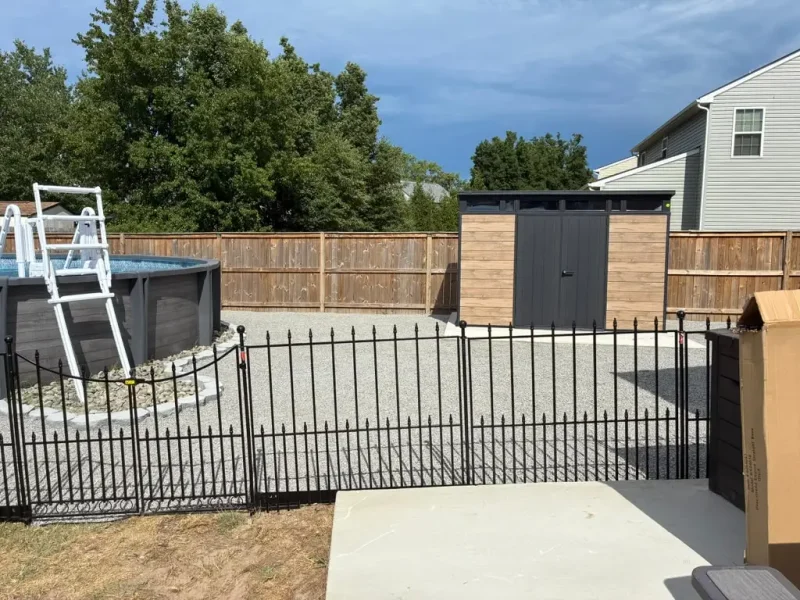
A pea gravel and pavers combination works particularly well in Newport News backyards — large pavers set into a gravel field provide stable footing and visual structure, while the gravel fills the surrounding area at lower cost and handles drainage across the full footprint. The contrast between smooth pavers and textured gravel also adds visual dimension that makes the space feel considered rather than utilitarian.
Iron and Aluminum Fencing: Structure That Doesn’t Require Upkeep
Wood fencing is the default choice in most Newport News backyards, but it’s also the component most likely to require attention over time — particularly in a yard that combines moisture from a pool, humidity from the climate, and the vine and vegetation growth that Hampton Roads’ growing season produces. Wood rots, warps, fades, and invites the exact vine attachment that causes long-term structural damage.
Iron and aluminum pool and backyard fencing solves most of those problems. Both materials resist the moisture and salt air that deteriorates wood in Hampton Roads conditions, neither warps or swells with humidity changes, and neither provides the organic surface that vines and moss attach to and break down. They also define the backyard space visually in a way that creates a finished, structured look — particularly when paired with gravel and pavers rather than lawn, where the clean lines of metal fencing complement the hardscaped surface rather than competing with it.
The practical distinction between the two: wrought iron is heavier and more traditional in appearance, with a classic look that works well with older home styles. Aluminum fencing offers the same visual profile at lighter weight and with better corrosion resistance — a meaningful difference in a coastal environment where salt air accelerates surface oxidation on raw iron. Both are far lower maintenance than wood over a five- to ten-year horizon.
Designing the Three Elements Together
The approach that works best in Newport News backyards combines all three materials with clear roles:
- Gravel covers the main surface area, replacing grass and providing drainage across the full backyard footprint — especially effective around pool surrounds, beneath play structures, or in large open areas that would otherwise require regular mowing
- Pavers define paths and zones, providing stable footing from the back door to the pool, between the seating area and the storage structure, and at any entry or transition point where a consistent, clean surface matters
- Iron or aluminum fencing creates the perimeter, separating the pool area from the rest of the yard for safety, defining the backyard as a distinct outdoor space, and providing structure without the maintenance demands of wood
Together, the three elements produce a backyard that reads as intentional and well-designed — not just low maintenance for its own sake, but genuinely better-looking and more functional than a grass yard that’s constantly fighting the Hampton Roads climate.
What to Expect From a Project Like This in Newport News
The preparation work matters as much as the materials. Grading the soil for proper drainage before gravel goes down, compacting the base correctly before pavers are set, and installing landscape fabric that won’t break down under the UV exposure Virginia summers deliver — these are the details that determine whether a low-maintenance backyard stays low-maintenance for years or starts requiring fixes within a season or two.
B. Meister Landscaping designs and installs hardscaping projects throughout Newport News and the surrounding Hampton Roads area, including gravel installations, paver walkways and entry points, and backyard transformations that replace high-maintenance grass with materials that hold up on their own.
📞 Contact us today for a free estimate and let’s design a backyard that works for you — not the other way around.