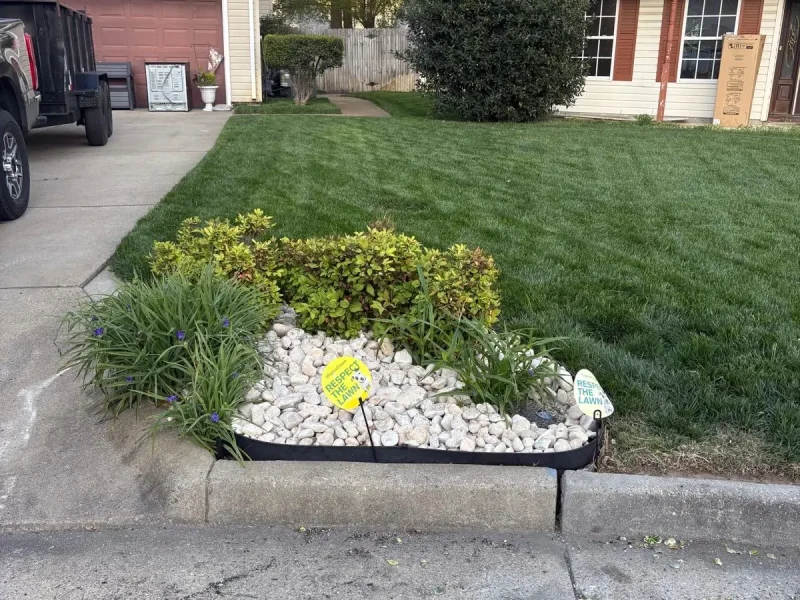
Every yard has one: the small, odd-shaped patch where the driveway meets the curb, the narrow strip beside the pavement, or the leftover triangle of lawn nobody quite knows what to do with. These spaces are small, but they sit at the most visible point of the property, right where the street, the driveway, and the front yard meet.
Left alone, they tend to look like an afterthought: ragged grass edges, bare soil, a couple of random plants. With a clear plan, the same spot can look like a deliberate part of the design. Here is how to approach it.
Why These Small Spaces Look Unfinished
Awkward spaces usually look unfinished for the same few reasons:
- No defined edge. An irregular line between lawn, soil, and pavement makes any bed look accidental.
- Bare or patchy ground. Exposed soil reads as neglect, especially next to a well-kept lawn.
- Too many unrelated plants. A scattering of single plants with no repetition looks random.
- Wrong scale. Plants that outgrow the space, or a bed that is too small for its surroundings, never look settled.
The fix is not a bigger budget. It is structure: a clear boundary, a consistent ground treatment, and a few well-chosen plants. An irregular lawn edge and bare soil look unplanned, while a defined bed with clean edging looks designed.
Step One: Define the Edge
Edging does the most visual work per dollar in a small bed, and it also keeps mulch, rock, and soil from spilling onto the driveway and street.
For concrete driveways and curbs, steel or aluminum landscape edging gives the cleanest, most durable result, and it is the most versatile option for most small beds. Flexible metal edging also traces smooth, continuous curves, while rigid materials like brick or cut stone create faceted lines that fight a curve. If your corner bed is rounded, flexible metal usually looks the most natural.
Stone and paver borders are a good choice for a more formal look or a straight run. Whatever you choose, install it firmly and consistently along the full boundary. A partial edge looks worse than none.
Step Two: Choose One Ground Treatment
A small bed looks calmer when it has a single, consistent surface. The two most common choices:
River rock or decorative stone. Rock is a strong choice for hot, hard-to-water corners next to pavement. It suppresses weeds, reduces erosion, and needs very little upkeep beyond the occasional pressure wash. For a tight border against a driveway, a band of decorative gravel or river rock about 12 to 18 inches wide, contained by metal edging, keeps the look clean.
Two details make rock last in Hampton Roads:
- Install landscape fabric underneath. Without it, weeds push through from the soil and the rock slowly sinks into clay.
- Contain the rock with edging. Loose stone migrates onto the driveway and into the lawn without a barrier.
Mulch. Dark or natural mulch is a better fit when the bed has more plants and you want a softer, more traditional look. It needs a refresh every year or so in Virginia’s heat and humidity.
Either way, pick one and keep it consistent across the whole bed.
Step Three: Plan the Planting With Height and Visibility in Mind
Because these beds sit beside driveways and streets, height matters for safety as well as looks. Keep plants low near the driveway exit and street edge so drivers and pedestrians can see clearly, and put anything taller toward the back or the interior of the bed.
A simple layered formula works in almost any small bed:
- Anchor at the back or center. One or two compact shrubs give the bed structure and year-round presence. Evergreen choices like holly or boxwood hold shape in winter, while flowering shrubs add seasonal color.
- Mid-layer for color. Low-maintenance perennials such as daylilies fill the middle and bloom through summer.
- Low edge plants. Evergreen lilyturf (liriope) stays about 12 to 18 inches tall, produces purple flower spikes in late summer, and needs very little care. It is excellent along a border.
- Optional tall accent, set back. Ornamental grasses add movement and winter texture. Tall varieties like feather reed grass reach four to five feet, so keep them away from the street and driveway sight lines.
Repetition is the secret to a designed look. Repeating the same plant two or three times gives a small bed rhythm instead of a random collection.
Choose Plants That Handle the Heat
Corner and driveway beds are tougher environments than the rest of the yard. Concrete and asphalt reflect heat, the soil is often compacted clay, and the spot may get less watering attention than beds near the house. In Hampton Roads, that combines with long, humid summers.
Pick tough, low-maintenance plants that look good through the year and don’t need staking, deadheading, or frequent division. Group plants with similar water needs together, and give new plantings regular water through their first season until roots establish.
Handle Drainage Before You Plant
Low corners next to curbs often collect runoff, and Newport News clay drains slowly. If water pools in the spot after rain, address it before planting. A bed shaped slightly higher than the surrounding grade, or a rock-lined area that lets water move through, keeps roots from sitting wet and keeps soil and mulch from washing into the street.
Keeping It Looking Intentional
Small beds are easy to maintain, but they need regular attention to keep their finished look:
- Check the edging each season. Heave, shifting, and mower damage can open gaps.
- Trim shrubs and cut back perennials on schedule so the bed doesn’t outgrow its space.
- Refresh mulch or rinse rock as needed. Rock gets dusty and stained over time, and a pressure wash brings it back.
- Pull weeds early. A few weeds in a small bed are very noticeable.
Let B. Meister Turn Your Awkward Corner Into a Feature
Small spaces reward careful design: the right edging, the right ground cover, and a planting plan that fits the scale. B. Meister Landscaping provides hardscaping, edging, and bed installation throughout Newport News and the surrounding Hampton Roads area, including driveway corners, curbside beds, and other tricky spaces that need a clear plan.
📞 Contact us today for a free estimate, and let’s make the most visible corner of your yard look like it was planned that way.