Mulch color is one of those landscaping decisions that most Newport News homeowners make quickly — grabbing whatever’s available at the hardware store without much thought — and then wonder why the beds don’t look quite the way they expected. The truth is that mulch color has a real impact on how a yard reads from the street. The right choice makes plants pop, complements the home’s exterior, and gives beds a finished, intentional look. The wrong choice can clash with the architecture or fade so fast that the whole yard looks tired by midsummer.
Here’s how to think through colored mulch the right way for a Newport News yard.
Why Color Matters More Than Most Homeowners Think
Mulch does the same functional job regardless of color — it retains moisture, regulates soil temperature, and suppresses weeds. But visually, the three standard colors behave very differently in a landscape bed, and each one works better with certain home styles, plant selections, and exterior color palettes than others.
In Hampton Roads, there’s an additional factor: our long, hot, humid summers put colored mulch under more UV stress than it would face in a cooler or drier climate. Fade rate — how quickly a mulch color loses its vibrancy — is a real consideration here, and it varies significantly between red, black, and brown.
Red Mulch: Bold Contrast, Faster Fade
Red mulch is dyed with iron oxide — the same pigment found in red brick and terra cotta — which gives it that warm, rust-red color. It’s the most visually assertive of the three options and creates strong contrast against green grass and foliage. Red mulch pairs particularly well with green shrubs, plants with purple or burgundy foliage, and homes with yellow, tan, beige, or brown siding.
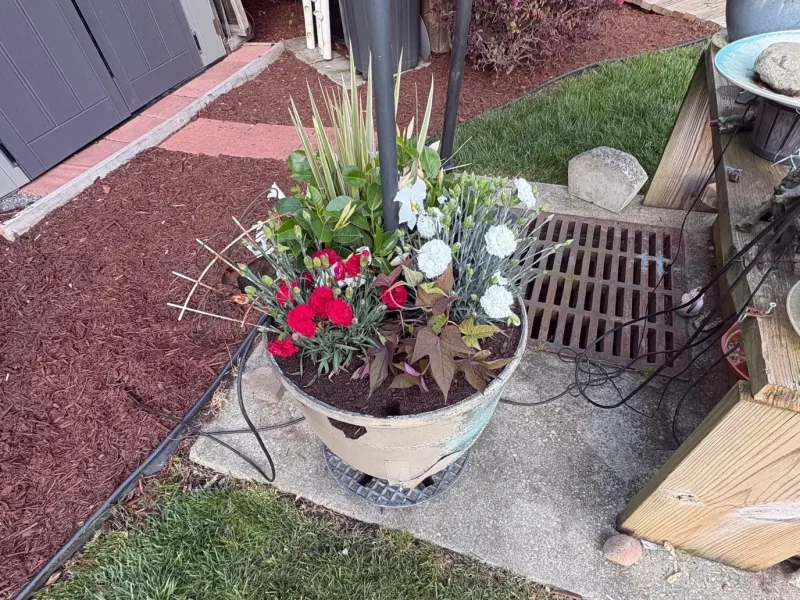
In Newport News, red mulch looks especially natural around homes with brick accents or warm-toned exteriors, and it works well in decorative beds where the goal is visual impact. The image on this post shows exactly what red mulch can do when combined with colorful container plants and clean brick edging — the warm tones of the mulch and the brick complement each other and give the whole space a cohesive, layered look.
The trade-off is fade rate. Red iron oxide doesn’t bond as deeply into wood fiber as black dye does, which means red mulch tends to fade faster than black — in full sun exposure, color can begin to wash out in four to six months in a Virginia summer. For high-visibility beds that get direct sun through the afternoon, plan for a refresh every season.
Red mulch is not the right call for every home. It can clash with cooler exterior color schemes — gray siding, blue trim, white with black accents — and it tends to look out of place in more traditional colonial-style homes common to older Newport News neighborhoods.
Black Mulch: Clean, Modern, Long-Lasting Color
Black mulch uses carbon black pigment, which resists UV degradation significantly better than iron oxide. Black mulch dye typically lasts eight to twelve months — making it the most color-stable option through a full Hampton Roads growing season. It also hides the natural graying that occurs as organic mulch weathers, so beds maintain a cleaner appearance longer between refreshes.
Visually, black mulch delivers a sharp, modern contrast against green foliage and brightly colored flowers. It’s a particularly strong choice for white, gray, or light-colored home exteriors — the contrast between the black beds and a white or light-colored facade reads as clean and polished from the street, which is exactly what curb appeal is built on.
Black mulch dominates the Mid-Atlantic region, including coastal Virginia, precisely because it works well with the range of home styles found in established neighborhoods. It’s the most versatile performer across different architectural styles and plant palettes.
The one consideration specific to Hampton Roads: black mulch absorbs and retains more heat than red or brown. In full-sun beds with shallow-rooted or heat-sensitive plants, that additional soil heat can be a stress factor through peak Virginia summer. In shaded beds, under established trees, or in areas that get afternoon shade, this isn’t a concern.
Brown Mulch: Natural, Versatile, Easy to Maintain
Brown mulch — whether natural shredded hardwood or dyed to a consistent tone — is the most neutral and naturally versatile option. It blends with existing landscapes rather than contrasting against them, which makes it the safest choice when the goal is a clean, maintained look without a strong visual statement.
Brown dye is more resistant to sunlight exposure and weathering than red, which means dyed brown mulch retains its color longer than red despite using a similar base material. Natural brown mulch fades more gradually and less noticeably than either red or black, since the color shift is toward a natural gray-brown rather than a washed-out version of a bold color.
Brown mulch works well with virtually any home exterior and pairs naturally with earth-toned plants like ornamental grasses, lavender, black-eyed Susans, and native shrubs common in Hampton Roads yards. It’s the right choice when the homeowner wants the beds to look consistently maintained without the mulch itself drawing attention.
Matching Mulch Color to Your Newport News Home
A few practical guidelines for choosing based on what’s already on the property:
- White, light gray, or light-colored siding → Black or red mulch creates bold contrast and gives beds strong visual definition from the street
- Brick-front or warm-toned exteriors → Red mulch echoes the brick tones and creates a cohesive, warm palette; brown also works well
- Dark exteriors or homes with dark trim → Brown mulch provides balance without competing; black can work in shaded beds
- Neutral or mixed-material exteriors → Brown is the safest default; black works well if the goal is a more modern, polished look
- Colorful flowering beds or plants with purple or burgundy foliage → Red mulch makes those colors stand out; black also works well as a neutral backdrop that lets bright flowers pop
One More Factor: How Hampton Roads Humidity Affects Colored Mulch
Beyond fade, Virginia’s humidity affects how colored mulch behaves at ground level. In dense, shaded beds with limited airflow — common in established Newport News neighborhoods with mature tree canopy — mulch stays moist longer, which accelerates decomposition. That means the mulch layer shrinks faster than it would in a drier climate, regardless of color.
Checking depth annually and refreshing when the layer drops below two inches is more important in Hampton Roads than the color choice itself. A bed with perfectly chosen red or black mulch that’s thinned to less than an inch by midsummer has lost most of its functional and visual benefit.
Let B. Meister Help You Choose and Install the Right Mulch
Choosing the right colored mulch for a Newport News yard involves matching color to the home’s exterior, selecting a material that holds up through Virginia’s climate, and installing it at the right depth over quality landscape fabric. B. Meister Landscaping handles mulch installation throughout Newport News and the surrounding Hampton Roads area — helping homeowners select the color and material that works for their specific yard and installing it correctly so it performs through the full season.
📞 Contact us today for a free estimate and let’s get your beds looking sharp.